Executive Summary
- Cow comfort is a key driver of dairy farm performance, not simply a welfare consideration.
- Levels of comfort directly affect feed intake consistency, rumen stability, milk yield, fertility, health costs and labour efficiency.
- Poor cow comfort introduces hidden inefficiencies, including reduced feed conversion, increased disease incidence and higher management time spent addressing preventable issues.
- These inefficiencies compound over time, quietly eroding dairy farm profitability.
- Feed consistency is a critical but often underestimated component of cow comfort.
- Variability in silage quality, caused by oxygen ingress and spoilage, disrupts intake patterns and increases stress at the feed face.
- Disrupted intake negatively affects lying behaviour and overall herd performance.
- Treating cow comfort as a business decision and risk-reduction strategy improves output predictability, reduces losses and helps protect margins in volatile markets.
Cow comfort is still too often framed as a welfare issue, something important but secondary to production. That mindset is quietly costing dairy farms money every day.
In reality, cow comfort is an operational performance issue. It directly affects milk yield consistency, feed efficiency, fertility, health costs and labour demand. Farms with poor comfort do not just have less content cows. They carry hidden inefficiencies that erode margins over time. The most profitable dairy systems do not treat cow comfort as a “nice-to-have”. They treat it as a core input into predictable performance.
What Does Cow Comfort Mean on a Dairy Farm?
Cow comfort is not an abstract concept. On a working dairy farm, it shows up in very practical ways.
Comfortable cows:
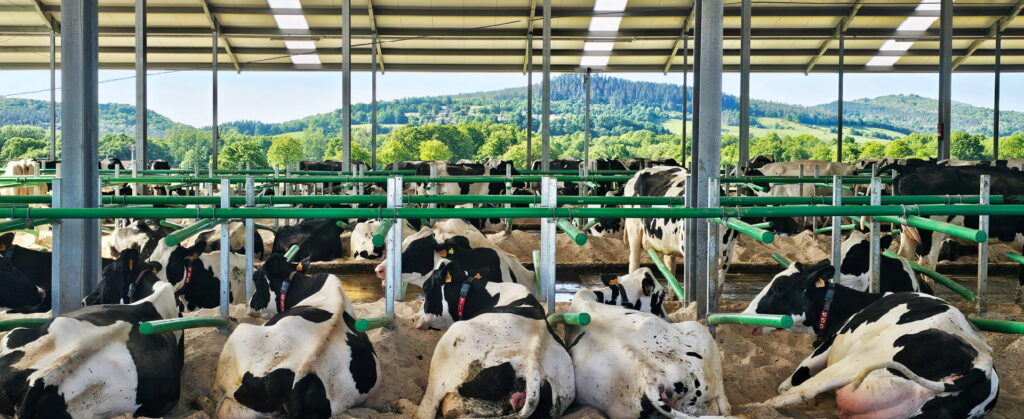
- Spend sufficient time lying down and resting
- Have clean, dry, well-managed housing
- Experience minimal stress at the feed face
- Consume a consistent, palatable ration day after day
When any of these break down, cows compensate and that compensation usually shows up as reduced intake, poorer health or inconsistent production.
Standing too long, avoiding cubicles, sorting feed or fluctuating intakes are all signs that comfort is already compromised.
The Hidden Cost of Poor Cow Comfort
The biggest mistake many dairy farmers make is underestimating how quickly poor comfort translates into financial loss.
Milk Yield and Feed Efficiency
Cows that are stressed or uncomfortable do not eat consistently. Reduced or erratic intake disrupts rumen function, leading to poorer feed conversion and uneven milk output.
Even small daily reductions in intake or efficiency compound across the herd and across the year, quietly dragging down total milk sold per tonne of feed.
Fertility and Health
Poor comfort increases the incidence of lameness, mastitis and metabolic disorders. These issues do not just increase veterinary costs. They extend calving intervals, increase culling rates and reduce lifetime yield per cow.
Every additional health intervention is a signal that the system is compensating for preventable stress.
Labour and Management Time
Uncomfortable cows demand more attention. Time that should be spent optimising performance gets diverted into managing problems, treating lame cows, dealing with inconsistent yields or correcting feeding issues.
Labour inefficiency is one of the least measured but most expensive consequences of poor cow comfort.
Feed Consistency: A Critical but Overlooked Comfort Factor
Housing and cubicle design get a lot of attention when cow comfort is discussed. Feed consistency often does not, despite being just as influential.
Cows thrive on predictability. When forage quality varies across the clamp or changes rapidly day to day, cows respond with:
- Reduced dry matter intake
- Selective feeding
- Greater risk of acidosis
- Increased stress around feeding times
Average ration analysis means little if what reaches the feed face is inconsistent. From the cow’s perspective, variability is stress, even when nutrition is technically balanced.
How Silage Quality Directly Affects Cow Comfort
Silage quality plays a central role in feed consistency and therefore in cow comfort.
When oxygen penetrates the silage face:
- Spoilage increases
- Nutrient losses accelerate
- Heating reduces palatability
- Intake becomes unpredictable
Cows respond by sorting, backing off feed or altering intake patterns. These behaviours reduce lying time and disrupt rumen stability, both of which undermine comfort and performance.
Protecting silage effectively is not just about preserving forage. It is about delivering the same diet, in the same condition, every single day.
Cow Comfort as a Risk-Reduction Strategy
From a business perspective, cow comfort is best understood as a form of risk management.
- Comforted cows are:
- More consistent in output
- Less prone to health shocks
- Easier to manage at scale
Consistency reduces volatility, and volatility is one of the biggest threats to dairy profitability. Farms that prioritise comfort experience fewer surprises, and fewer surprises mean tighter cost control and more reliable margins.
Rethinking Cow Comfort as a Business Decision
The most effective dairy farmers do not ask whether cow comfort matters. They ask where comfort is being compromised without good reason.
Questions worth asking include:
- Where are cows being stressed unnecessarily?
- Is feed quality undermining intake consistency?
- Are problems being treated after the fact instead of prevented at source?
Cow comfort is not about doing more. It is about losing less milk, feed value, time and margin.
When comfort is built into the system properly, performance follows.