
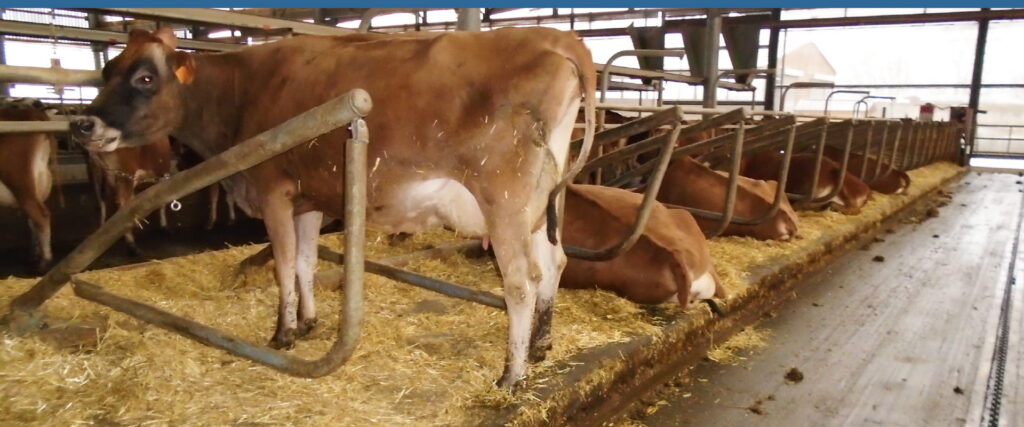
Where rubber flooring or cubicle upgrades pay back quickest before grazing.
Spring is one of the most demanding periods of the year for dairy cows. Turnout is often inconsistent, with wet weather and changing ground conditions meaning cows spend more time on concrete and in cubicles than many farms might anticipate. Instead of moving steadily onto grass, many herds can experience a stop–start transition between housing and grazing depending on the weather.
That extra time indoors can expose weaknesses in cow comfort. Slippery collecting yards, worn concrete passages and poorly performing cubicle beds quickly show their impact. Lameness, swollen hocks, dirty bedding and reduced lying time can all increase just as cows should be milking hardest from early-season grass.
The good news is that relatively small upgrades can deliver fast returns. By targeting the areas that cows use most during milking and feeding, farmers can improve comfort quickly. This article highlights the rubber flooring and cubicle improvements that typically deliver the quickest payback before or during the early grazing period.
Why pre-grazing upgrades punch above their weight
The weeks around turnout are when fresh and high-yielding cows are under the greatest pressure. Early-lactation animals are producing large volumes of milk, adapting to changing routines and often walking longer distances between housing, parlour and grazing.
At the same time, claw horn is under increased stress. Studies have shown that lame cows can produce 200–400 litres less milk per lactation, while severe cases often lead to reduced fertility and increased culling risk. Preventing even a small number of cases early in the season therefore has a disproportionate economic benefit.
Comfort improvements made before or during early grazing also multiply their impact over the rest of the year. If cows experience fewer injuries or mobility problems during peak production, the benefits carry through to:
- More consistent days in milk
- Lower mastitis and lameness incidence
- Better body condition and conception later in the breeding period
When thinking about payback, it helps to focus on avoided losses rather than direct returns. Faster cow flow, more lying time and fewer injuries all translate into healthier cows making better use of grass. Small infrastructure upgrades can therefore influence herd performance for the entire grazing season.
Quick-payback rubber flooring upgrades
Rubber flooring is one of the most effective ways to improve traction and reduce impact stress in high-traffic areas. When installed in the right locations, it can quickly reduce slips, claw wear and the strain placed on cows during daily movements.
Collecting yard and parlour
The collecting yard is often the busiest and most physically demanding area cows encounter each day. Animals may stand here for extended periods while waiting to enter the parlour, frequently on smooth or worn concrete.
Installing rubber flooring in this area can deliver several immediate benefits:
- Reduced slipping and better traction
- Improved cow confidence when entering the parlour
- Faster cow flow and calmer milking routines
- Less claw wear and sole bruising during peak traffic
These improvements are particularly valuable in larger herds, systems with long milking times or older yards where concrete grip has deteriorated.
From a payback perspective, the logic is simple. If better traction prevents even a small number of lameness cases each month, the economic return becomes significant very quickly. For example, avoiding one lame cow per 50 animals per month can rapidly offset the cost of installing rubber in the collecting yard.
Feed passages and cross-overs
Feed passages and cross-overs are another area where traction and comfort make a noticeable difference to cow behaviour.
In systems where concrete surfaces are hard or slippery, cows may hesitate at turns or avoid certain routes altogether. This can result in crowding, pushing and reduced access to the feed face.
Rubber flooring in these areas can improve:
- Confidence when walking and turning
- Stability at cross-overs and gateways
- Access to feed during peak feeding times
For early-lactation cows in particular, improved mobility can encourage better intakes and reduce the likelihood that sore-footed animals hang back from the feed face.
3 signs your passages may need a rubber upgrade this spring
- Cows hesitate or slip when turning into cross-overs
- Animals queue or crowd at certain passages
- Concrete surfaces are smooth or worn from years of scraping
When these signs appear, installing rubber in targeted sections can deliver quick improvements without needing to cover entire buildings.
Cubicle changes that pay back fastest
Flooring is only part of the comfort picture. The cubicle itself has a major influence on lying behaviour, hygiene and injury rates.
Even relatively small changes to cubicle design or bedding can significantly increase the time cows spend resting.
Upgrading beds (mats and mattresses)
Cubicle beds that are too small, hard, uneven or worn often lead to hock injuries and reluctance to lie down. Cows may perch with their front feet in the stall rather than lying fully, which reduces resting time and increases manure contamination.
Installing mattresses can help address these issues by providing:
- Better cushioning for joints and hocks
- Greater stability when cows lie down or stand up
- Increased willingness to lie fully in the stall
This becomes particularly important during spring when cows frequently move between housing and grazing. Each time animals return indoors, the quality of the cubicle determines whether they rest properly or remain standing.
Even small improvements in comfort can increase lying time by 30–60 minutes per cow per day, which research consistently links to improved milk production, hoof health and overall welfare.
Small but powerful adjustments
Not every cubicle improvement requires a full bedding replacement. In many older sheds, relatively minor adjustments can have a surprisingly large impact.
Examples include:
- Repositioning brisket boards to encourage correct lying position
- Adjusting neck rail height or placement to reduce perching
- Improving or replacing cubicle dividers that restrict cow movement
Correct positioning encourages cows to lie straight within the stall and rise comfortably. The result is cleaner beds, fewer injuries and higher cubicle occupancy.
These adjustments can often be carried out quickly before the grazing season becomes fully established.
Where to start – ranking upgrades by impact
When several improvements are possible, prioritising the highest-impact changes helps ensure investment delivers the fastest return.
| Priority level | Upgrade type | Best suited to | Main benefits |
| Tier 1 | Collecting yard rubber | Any herd with busy parlour | Fewer slips, better flow, reduced lameness |
| Tier 1 | Mattress or top cover on worst beds | High-yielding or fresh cows | More lying time, improved hock health |
| Tier 2 | Feed-passage or cross-over rubber | Herds with lameness or long walks | Better mobility and more confident feeding |
| Tier 2 | Brisket or neck rail adjustments | Older cubicles or mixed cow sizes | Cleaner beds and fewer injuries |
Tier 3 improvements may involve larger layout or building changes such as expanding passages or redesigning cubicle rows. These projects can deliver major benefits but are usually better planned after the grazing season when sheds are less heavily used.
How to judge if an upgrade will pay for itself
A simple back-of-the-envelope calculation can help determine whether a comfort upgrade makes financial sense.
Start by identifying the most common issues currently affecting the herd:
- Lameness cases
- Hock damage or swollen joints
- Mastitis linked to dirty bedding
- Time spent scraping beds or managing cow flow
Next, estimate the real cost of these problems. A lame cow can cost several hundred pounds through lost milk, treatment costs and reduced fertility. Similarly, discarded milk from mastitis quickly adds up.
Finally, compare those losses to the one-off or annualised cost of installing rubber flooring or upgrading cubicles.
In many cases, the upgrades that pay back fastest are those that eliminate a repeated, visible problem occurring every day in the same location.
Practical planning and next steps
Improving cow comfort before or during early grazing does not require a full building overhaul. Targeted upgrades in the right locations can deliver meaningful improvements quickly.
A simple approach is to:
- Walk the full route cows take during spring turnout, from housing to parlour and feed areas.
- Identify the three worst problem spots where slipping, congestion or discomfort occurs.
- Prioritise one flooring upgrade and one cubicle improvement that can be completed before full turnout.
- Plan any larger layout or building changes for after the grazing season when sheds are less busy.
By focusing on the areas cows use most frequently, farmers can make practical improvements that protect mobility, increase lying time and help cows perform at their best throughout the grazing season.
Key Takeaways
- Spring turnout is often inconsistent, meaning dairy cows spend more time on concrete and in cubicles than expected. This increases the risk of lameness, hock damage and reduced lying time during peak milk production.
- Small comfort upgrades made before or during early grazing can deliver fast returns by improving mobility, cow flow and resting behaviour.
- Rubber flooring in collecting yards, parlours and high-traffic passages is one of the quickest-payback upgrades, reducing slips, claw wear and stress during daily movements.
- Cubicle improvements, including modern mats or mattresses and correctly positioned brisket boards or neck rails, increase lying time and reduce injuries.
- Even modest increases in resting time and small reductions in lameness can significantly improve milk production, fertility and herd longevity over the grazing season.
- The fastest payback usually comes from fixing the most heavily used or visibly problematic areas in cow housing and traffic routes.
- Farmers can prioritise upgrades by assessing current pain points such as lameness, poor cow flow, dirty beds or excessive labour maintaining cubicles.
Targeting one flooring improvement and one cubicle upgrade before turnout can quickly improve cow comfort and support stronger performance.
Click here to view Intershape’s range of products and upgrades.