
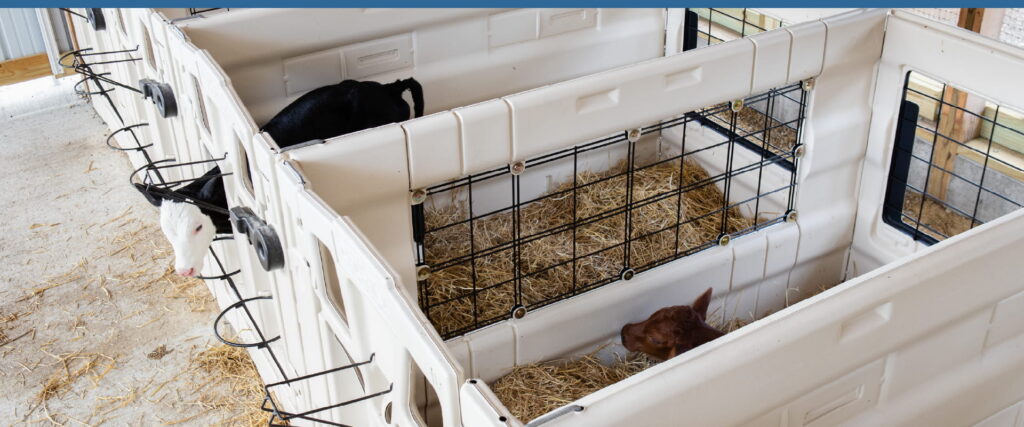
As temperatures rise, calf housing needs to do more than provide shelter. Ventilation, humidity control, airflow, and shade all play a role in keeping calves comfortable, maintaining feed intake, and reducing environmental stress.
Warm conditions can quickly increase pressure inside poorly ventilated housing. Damp bedding, stale air, and heat build-up can affect calf welfare and make hygiene management more difficult. Good calf housing design helps control these conditions while still protecting calves from draughts and sudden weather changes.
For farmers, the challenge is maintaining a consistent environment that supports calf health without creating unnecessary labour or management issues.
Why calves are vulnerable to heat stress
Young calves are more sensitive to environmental changes than mature animals. They are less efficient at regulating body temperature and can become uncomfortable quickly in warm, humid conditions.
Heat stress is not only caused by high temperatures. Poor airflow and excess moisture can also create uncomfortable housing conditions, particularly during still weather or in enclosed areas with limited ventilation.
When ventilation is poor, humidity and ammonia levels can increase. Bedding can remain damp for longer, bacteria can build up more quickly, and calves may spend more time standing or avoiding certain areas of the hutch.
Over time, these conditions can affect feeding behaviour, comfort, and overall calf performance.
Signs of heat stress in calves
The early signs of heat stress are often subtle. Farmers should monitor calves closely during warmer weather and periods of poor airflow.
Common signs include:
- reduced feed intake,
- increased breathing rate,
- calves standing for longer periods,
- bunching around shaded or ventilated areas,
- lethargic behaviour,
- damp bedding and increased humidity inside housing,
- reduced resting time.
In group housing systems, overcrowding and poor airflow can make these issues more noticeable.
How housing design affects calf comfort
Housing design plays a major role in controlling airflow, humidity, and heat build-up.
Well-designed calf hutches should support continuous ventilation while protecting calves from direct draughts. The aim is to remove warm, stale air without creating unstable conditions at calf level.
Several design features can help improve summer calf comfort.
Opaque materials help reduce heat gain:
Housing materials can influence internal temperatures significantly during warm weather. Opaque hutch materials help reduce solar heat gain compared with more transparent surfaces that absorb and retain heat.
This helps create a more stable internal environment throughout the day.
Ridge ventilation supports airflow:
Ridge ventilation allows warm air to escape naturally from the housing structure. This encourages continuous airflow and helps reduce humidity build-up inside the hutch.
Effective ventilation also supports drier bedding conditions and better overall air quality.
Draught-free airflow is important:
Good ventilation should not create direct draughts around young calves. Housing layout, entrance positioning, and ventilation design all contribute to maintaining airflow without chilling animals.
The objective is controlled air movement rather than excessive exposure.
Moveable hutches improve flexibility:
Moveable calf hutches allow farmers to reposition housing based on weather conditions, drainage, and airflow.
This flexibility can help reduce exposure to direct afternoon sun and avoid areas where warm air becomes trapped.
Practical summer calf housing management tips
Good housing design works best alongside good day-to-day management.
During warmer periods, farmers should consider:
- ensuring calves have continuous access to clean water,
- monitoring bedding moisture regularly,
- increasing cleaning frequency where needed,
- avoiding overcrowding in group housing,
- positioning hutches to maximise natural airflow,
- maintaining spacing between hutches,
- avoiding sheltered dead-air areas around buildings or barriers.
Small adjustments to housing layout and management can make a significant difference during periods of warm weather.
Common calf housing mistakes in warmer weather
Some ventilation and hygiene issues develop gradually and may not be obvious immediately.
Common mistakes include:
- blocking ventilation openings to prevent draughts,
- allowing bedding moisture to build up,
- placing hutches in direct sun all day,
- overcrowding group pens,
- delaying cleaning during warm conditions,
- restricting airflow between hutches.
In many cases, problems are caused by airflow restriction and humidity rather than temperature alone.
Why easy-clean calf housing matters
Warm weather can increase hygiene pressure inside calf housing systems. Damp conditions and organic build-up can encourage bacteria, flies, and odour problems if cleaning routines become difficult to manage.
Easy-clean housing surfaces help improve turnaround between calves and support more effective disinfection routines. Smooth, power-washable materials also reduce the time needed for routine cleaning.
For farms managing multiple calves during busy periods, practical cleaning access becomes an important part of maintaining welfare standards and environmental control.
Choosing calf housing designed for year-round welfare
Calf housing should support consistent welfare standards throughout changing weather conditions, not only during winter.
Ventilation, humidity control, airflow, hygiene, and flexibility all contribute to calf comfort during warmer periods. Well-designed housing systems help farmers manage these conditions more effectively while maintaining practical day-to-day operation.
Intershape’s individual and group calf hutches are designed to support well-ventilated, draught-free, low-humidity environments while remaining practical to clean, position, and manage across different farm setups.
The result is calf housing that supports welfare, hygiene, and operational efficiency throughout the year.
How Intershape Can Help
We supply a range of high-quality livestock housing products to dairy and beef farmers across the UK. Our cubicles and feed fences, mats and mattresses, and ancillary housing equipment are competitively priced and backed by practical advice from a team with real farming knowledge.
Whether you need to replace a worn feed fence ahead of turnout, upgrade your passage matting before the spring flush, or plan a more comprehensive housing improvement project, we are here to help. As a family business based in Northamptonshire with over 30 years’ experience, we understand the pressures of spring and the importance of getting your infrastructure right before the season begins.
Browse our livestock range at www.intershape.com or call our team on 01327 300 395 for friendly, practical advice.
Key Takeaways
- Poor ventilation and high humidity can increase heat stress and reduce calf comfort during warmer weather.
- Effective calf housing should support airflow while remaining draught-free at calf level.
- Housing design features such as ridge ventilation, opaque materials, and moveable hutches can help manage heat build-up.
- Bedding condition, hutch positioning, cleaning frequency, and stocking density all affect summer calf welfare.
- Easy-clean calf housing helps improve hygiene control and reduce environmental pressure during warm conditions.